 Patient & Lifestyle Concierge
Shanghai has a long-established Muslim community, several historic mosques and plenty of halal food, if you know what to look for.
Mosques in the city
- Xiaotaoyuan Mosque, 52 Xiaotaoyuan Street, Huangpu. Built in 1917; the neighbouring women’s mosque dates from 1920. It is home to the Shanghai Islamic Association.
- Fuyou Road Mosque, 378 Fuyou Road, Huangpu, close to Yu Garden. It dates from the Qing dynasty.
- Huxi Mosque, No. 3, Lane 1328 Changde Road, Putuo, with small halal restaurants and food stalls nearby.
- Pudong Mosque, 375 Yuanshen Road, Pudong. A prayer hall for 300 opens for Friday and Eid prayers, with a women’s prayer room.
- Songjiang Mosque, in Songjiang district, the oldest in the Shanghai area, with roots in the Yuan dynasty.
Prayer times and visitor access can change, so check before you go, especially for Friday prayer.
Finding halal food
- Look for the characters 清真 (qīngzhēn), which mark halal food in China, often shown with the Arabic word حلال.
- Lanzhou beef-noodle shops and Xinjiang restaurants are halal and found all over the city.
- In food apps such as Dianping or Meituan, search 清真 to filter restaurants.
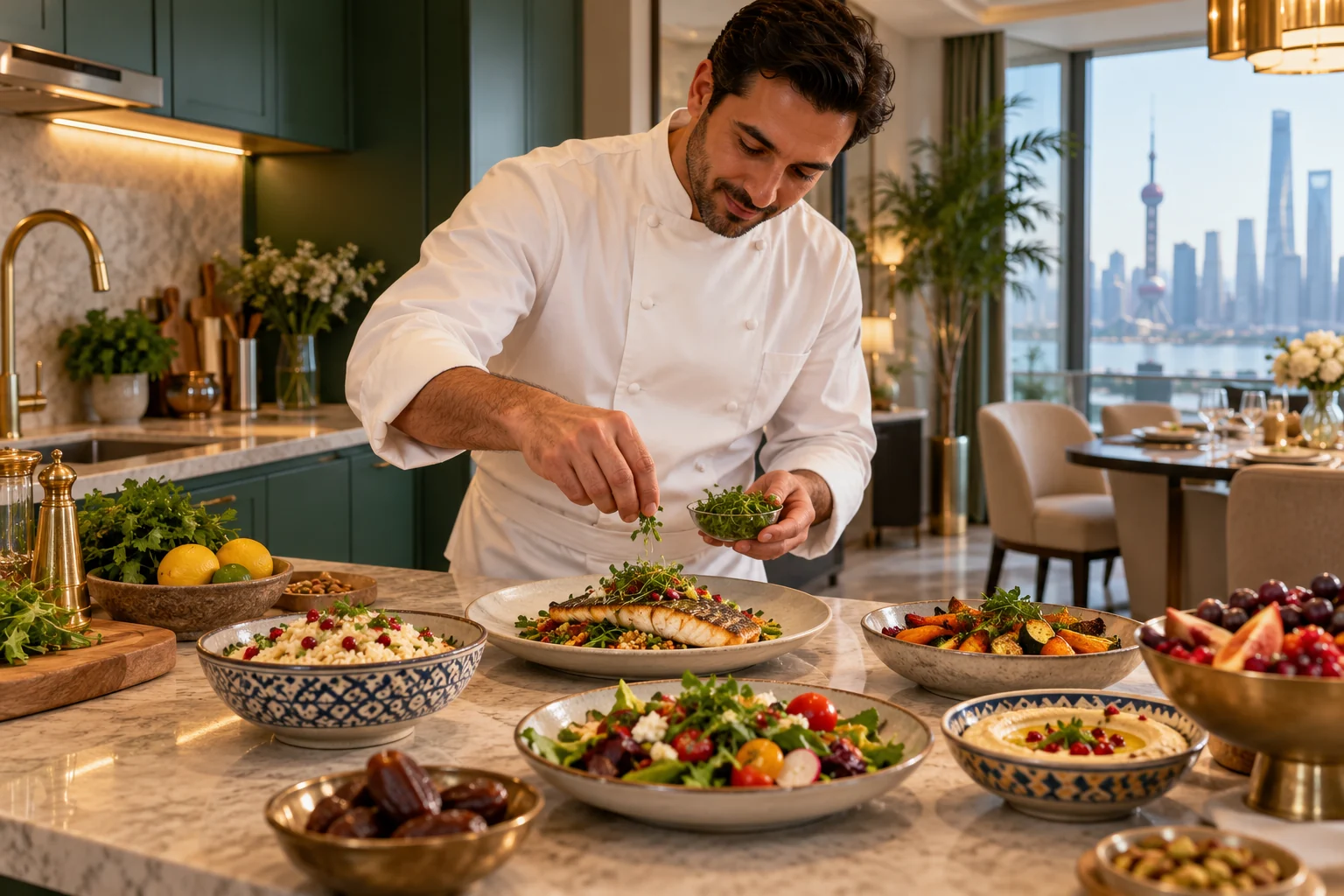
- Halal standards are set locally rather than by one national body. If you need strict assurance, ask how the meat is sourced, or arrange a private chef with a confirmed supplier.
In hospital and at your residence
- Ask the hospital, or us, in advance for halal meals; availability varies.
- Many hospitals can offer a quiet room for prayer if asked.
- In Shanghai the Qibla is roughly west-north-west, about 285 degrees from north.
- Some medicines contain gelatine or alcohol. Ask the doctor or pharmacist whether an alternative exists.
Journal articles are general information, not medical, legal or immigration advice. Rules change; check them for your situation before you travel.